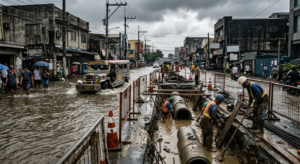



Bulacan is once again at the center of the country’s flood control debate. With the rainy season bringing heavier downpours each year, the national government has poured billions of pesos into flood mitigation projects in Central Luzon—including dams, pumping stations, and dike systems. Officials insist these projects are crucial to protect both Bulacan and the low-lying capital region. But for many Bulakeños, the promises come with uncertainty, controversy, and in some cases, outright opposition.
The Big-Ticket Projects
At the heart of the issue is the Bulacan Flood Control and Drainage Master Plan, which includes the Bulacan Bulk Water Supply Project, expansion of river systems, and several dams designed to regulate water flow. One of the most debated is the Kaliwa and Wawa dams, part of a larger infrastructure push to secure Metro Manila’s water and flood protection needs.
Another is the Bulacan Airport Flood Control Project, linked to the ₱735-billion New Manila International Airport being built in Bulakan, Bulacan. The airport project itself has raised alarms among environmental groups, but its flood management system—massive pumping stations and river diversions—has been pitched as a safeguard against worsening inundation in surrounding towns and Metro Manila.
Communities in the Crossfire
For residents of Bulacan, however, flood control often means displacement. Barangays near river systems and dam construction sites have reported relocation threats, with farmers and fisherfolk worried about losing both their land and livelihoods.
Civil society organizations argue that while Metro Manila stands to gain the most from reduced flooding, Bulacan communities are bearing the cost. In Malolos and Hagonoy, locals point to unfinished or poorly maintained dikes that fail to protect them during high tide and heavy rains, leaving villages submerged despite ongoing projects.
The Environmental Question
Environmentalists warn that river dredging and dam construction could disrupt ecosystems, aggravate siltation, and worsen flooding downstream. Groups like the Alyansa para sa Pagtatanggol ng Kabuhayan, Paninirahan at Kalikasan sa Bulacan (AKAP KA) have called for more transparent consultations, arguing that development without accountability risks creating “man-made disasters.”
Metro Manila Spillover
The stakes go beyond Bulacan. The province is a critical flood basin for Metro Manila, absorbing excess water from the Pampanga River and Angat River systems. Infrastructure failures in Bulacan don’t just affect local barangays—they threaten to flood northern Metro Manila, particularly Valenzuela, Malabon, and Caloocan.
This has fueled tension between national agencies prioritizing the capital’s flood protection and local communities demanding fair compensation, safety guarantees, and genuine consultation.
A Test Case for Climate Resilience
With climate change intensifying rainfall and sea level rise, the government insists on urgent action. Yet Bulacan’s experience underscores a national dilemma: can large-scale flood control projects truly balance urban protection, rural rights, and environmental sustainability?
If done right, the province could become a model for climate resilience. If mishandled, it could be remembered as a cautionary tale—where communities paid the price for saving Metro Manila.